How We Saved a Polyester Sofa From a Stubborn Grease Stain
A few weeks ago, a rather frustrated client called us about a large greasy stain on a sofa he’d bought only a few months earlier. At the store, he was told the sofa was easy to maintain and particularly suitable for busy households because it was made from a modern, highly durable engineered performance polyester. Our client thought this was the perfect sofa for his family.
Read also: How to Remove Grease Stains From Your Upholstery

Takeaway on the sofa is cosy, but spills happen, and, as this case shows., they could turn into awfully stubborn stains.
Then Came the Incident
His sons had friends over and ordered a large bucket of chicken with a side pot of gravy. As you may have already guessed, five minutes after the delivery, the whole thing was upside down on the sofa. The parents were out at a football match, so the boys panicked and tried their best to clean it up before anyone got home. They rubbed the stain with a towel, sprayed it with stain remover, then rubbed it some more. By the time the parents returned, the spill had turned into a much larger stain, and the sofa was soaking wet.
After sending the boys to their room, our client and his wife removed the cushion cover, applied a degreasing product and did their best to clean both the cover and the cushion. Once everything dried, the sofa looked fine.
But this didn’t last long – two days later, the grease stain started showing again. Over the following weeks, our client cleaned it twice, and the last time he used a highly alkaline degreaser and a steam cleaner. Each time, the sofa looked clean once dry, but the stain came back a couple of days later. After the third attempt to remove the stain, our client realised he needed to book a professional sofa cleaning and called us.
Check also: How to Remove Grease Stains From Your Carpets?
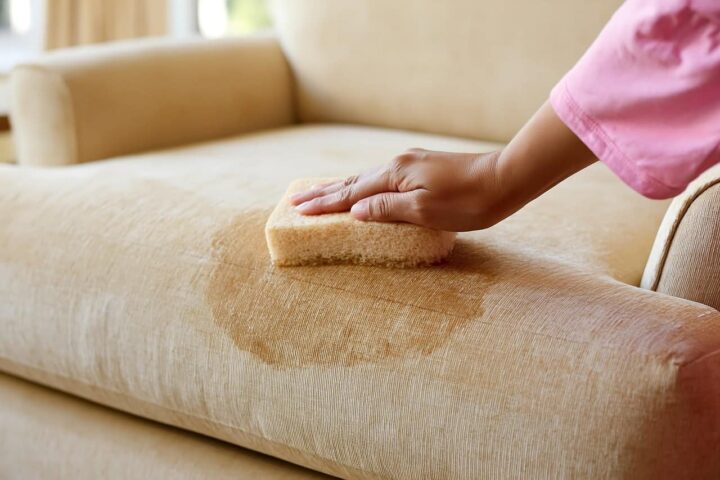
Soaking your sofa when treating a stain can push the grease further into the fabric.
Why Did the Stain Keep Returning?
After we spoke to the client over the phone, we knew removing the greasy stain from his polyester sofa wouldn’t be easy. Polyester is oleophilic, meaning it attracts oils and makes greasy stains difficult to remove. On inspection, we found a large, deeply set stain on one seat cushion. The client had already cleaned the removable cover a few times, so we took it off and checked underneath. Given everything the client told us, we weren’t surprised to find a greasy stain on the cushion itself. Most likely, when the boys spilt the gravy on the polyester upholstery, a lot of the grease had passed through the cover and deep into the cushion. So every time someone sat in that spot, their body heat and weight softened the grease and slowly pushed it up toward the fabric.
Read also: 12 Cost-Effective Ways to Clean Your Sofa
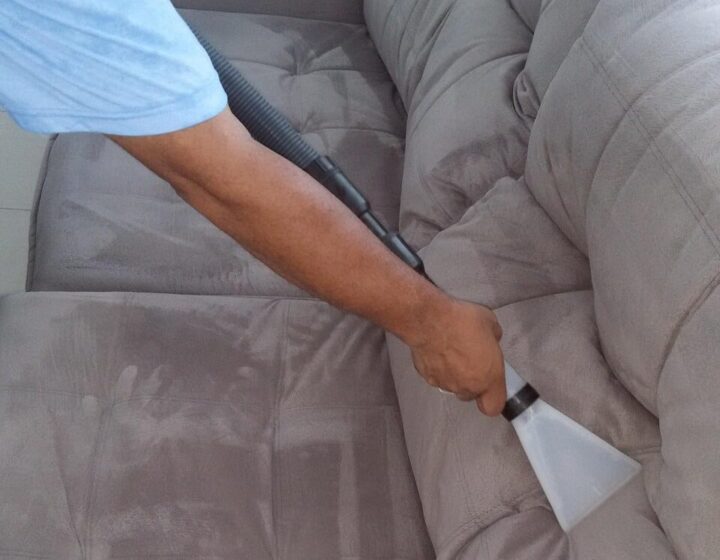
We removed the stain and then treated the whole sofa to make sure the upholstery looks evenly cleaned.
How We Fixed It
We put the cover back on and pre-treated the stain with a neutral fabric degreaser. Then, we set our hot water extraction machine to low temperature, low pressure and high suction and treated the sofa. We kept the water warm enough to loosen the grease remaining in the cover and the cushion, yet gentle enough not to damage the polyester or set the stain further. The low pressure ensured we didn’t push water and dissolved grease deeper into the cushion, while the high suction helped us draw out as much oil and moisture as possible. By the time we finished, the cover was almost dry, and the visible stains were gone.
However, with that much greasy sauce spilt on the sofa, there is no reliable way to check whether all the grease has been removed from the cushion, short of cutting it open to look inside. We took the cover off to let it dry separately from the cushion, because evaporating moisture can carry any remaining grease up to the surface.
Check also: How to Remove an Upholstery Stain Without Leaving Water Marks
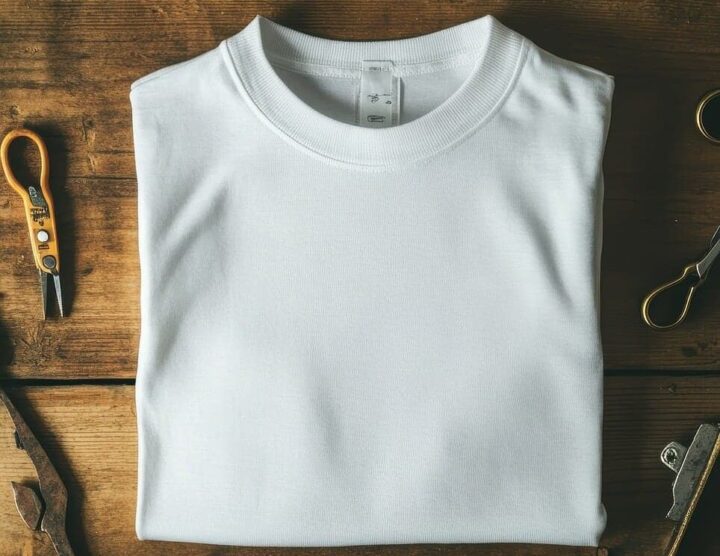
An old cotton T-shirt works great for soaking up grease stains.
A Simple Trick to Keep the Stain Away
We suggested our client do something a bit unusual after the cover and the cushion were completely dry to make sure the stain wouldn’t come back. We told him to place a piece of old, clean cotton T-shirt directly over the cushion, and then wrap the whole cushion (cotton included) snugly in cling film.
The cotton absorbs any grease still migrating out of the foam, and the cling film stops it from reaching the freshly cleaned cover. We recommended using cling film because it’s thin and flexible, so the cover would still fit properly and the seat would feel the same. He could use the sofa as normal and check the cotton after a few days, replacing it if it showed grease.
A week later, our client reported back. He had replaced the cotton fabric twice – the first piece had absorbed a noticeable amount of grease, the second only a little. He placed a new one, and there has been no sign of grease since. He was happy to keep his sofa without replacing the cover, or worse, buying a new sofa.
Check also: What Should I Expect from a Professional Upholstery Cleaning Service?

Hot water extraction machines do more than steam the upholstery.
What We Can Learn From This Case
We often get called to clean synthetic sofas, and unfortunately we see people repeat a few mistakes when trying to remove stains from the upholstery. This case is a good chance to point out a few things you can learn about cleaning polyester upholstery:
1. Performance polyester isn’t stain-proof
Many sofas are marketed as durable and easy to maintain, and often polyester upholstery has factory-applied stain-repellent finishes. And while stain protection can help with small spills and water-based stains, large amounts of oil can penetrate the finish and soak into the sofa. Even high-performance fabrics need proper cleaning, and the type of stain matters as much as the type of upholstery and whether it had stain protection or not.
Read also: Decode Upholstery Labels and Choose the Best Sofa for Your Needs
2. Blot spills immediately, but never rub
Rubbing spreads the stain and pushes it deeper into the sofa. When dealing with spills, soak up as much of the excess liquid as possible and blot gently. For grease, kitchen paper works well: lay it over the spill, let it draw the grease up, and replace it as it becomes saturated. For other spills, use a clean microfibre cloth or old cotton T-shirt to blot the spot gently.
Check also: How to Choose Upholstery Fabric for Easy Care of Your Furniture
3. Don’t experiment with cleaning products and methods
The biggest mistake in the case we shared was the sheer number of products and methods used on one stain. Some household degreasers are highly alkaline and can damage the upholstery or leave residues that complicate the sofa cleaning. Also, prolonged heat can soften or distort polyester, especially when cleaning chemicals or grease are still present.
Read also: Stain Removal is a Matter of Chemistry
4. Steam cleaning is not the same as hot water extraction
A household steam cleaner loosens dirt but can’t extract it, so with grease it may just spread it further. Hot water extraction machines apply and recover the solution, taking the dirt with it. If you’re unsure what the best way to clean your sofa is, check the manufacturer’s care instructions or call a professional.
No fabric is immune to stubborn stains. Even a successful DIY cleaning can leave water marks or a visible difference between the treated area and the rest of the sofa. For larger spills that have reached the cushion, especially for greasy ones, call a professional upholstery cleaner.